Non-Emergency Medical Transportation (NEMT) is transforming with advanced technology. Providers are turning to AI and automation to tackle challenges like missed appointments, rising demand, and compliance requirements. Here’s what’s driving the change:
- AI Scheduling: Predicts demand, reduces idle time, and improves resource management, cutting missed trips by up to 25%.
- Automated Dispatch: Matches trips to drivers in real-time, reducing errors and saving costs.
- Real-Time Route Optimization: Adjusts routes instantly for traffic or cancellations, lowering fuel costs by 30%.
- AI Chatbots: Handle booking requests and patient updates, reducing dispatcher workloads and no-show rates.
- EHR Integration: Syncs transportation with medical schedules, improving accuracy and reducing billing issues.
These tools improve efficiency, reduce costs, and align NEMT services with healthcare needs. As the demand for NEMT grows, adopting these technologies is key to staying competitive.
AI-Powered Predictive Scheduling
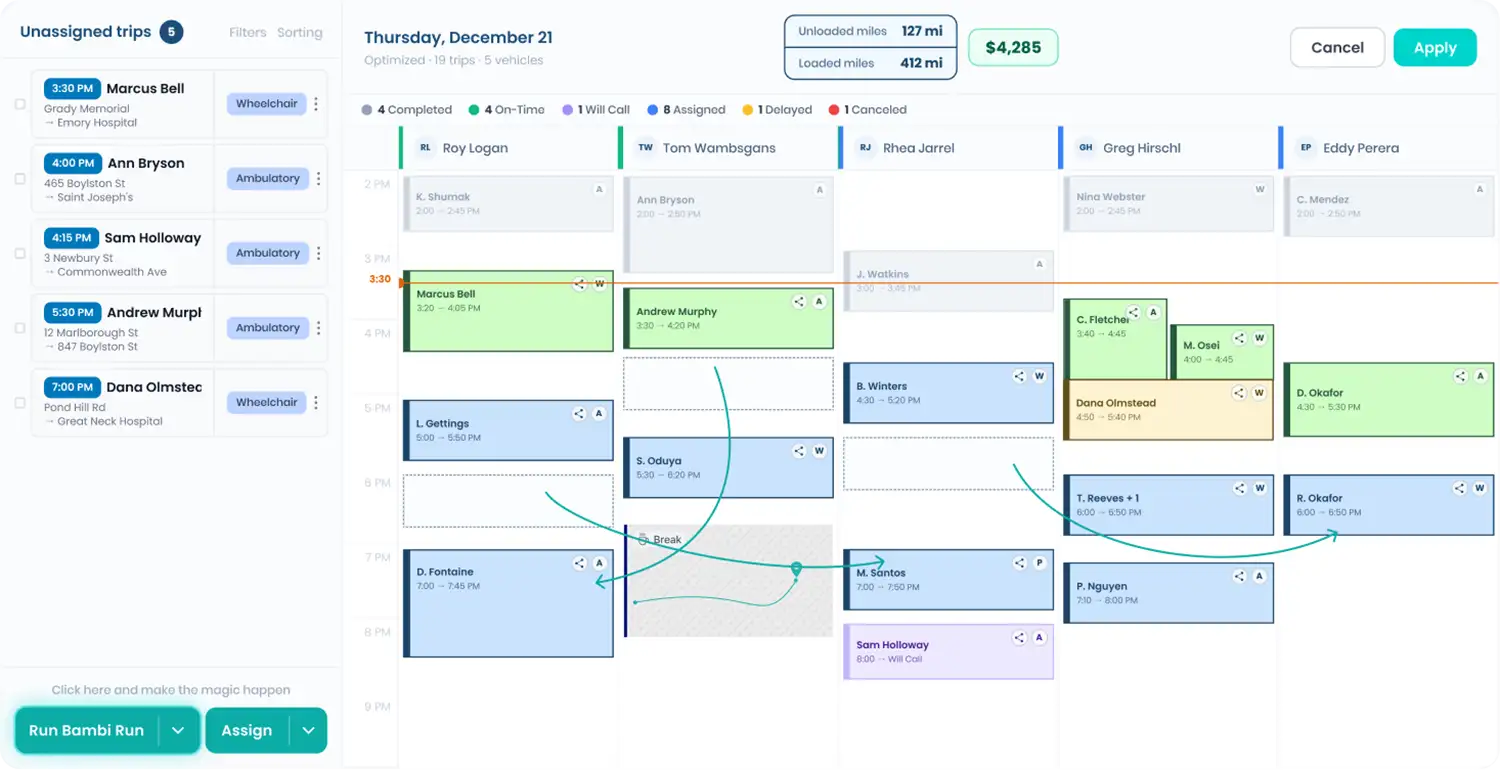
AI-powered scheduling is reshaping how NEMT providers manage their operations. By analyzing historical trip data, patient appointment trends, and traffic patterns, these systems can predict demand surges and potential delays. Using machine learning, they forecast peak days, high no-show risks, and other challenges, enabling providers to adjust staffing and vehicle availability in advance. This shift from reactive to predictive planning ensures better resource management - avoiding overstaffing during quieter times and chaos during busy periods.
These AI models also account for patient-specific needs, such as wheelchair accessibility, and estimate service times to improve accuracy in pickups and minimize driver downtime. By integrating both real-time and historical data - like traffic conditions, weather, and local events - schedules can adapt dynamically, mitigating unexpected delays.
Benefits of AI in Scheduling
AI-driven scheduling delivers measurable benefits. Providers have reported cost reductions of 15% and a 25% drop in missed trips. Efficiency gains in vehicle use and service capacity range between 15% and 25%. Beyond cost savings, AI minimizes scheduling errors by replacing manual guesswork with optimized scheduling tools and precise algorithms. For instance, a Texas provider saw a 37% reduction in scheduling errors and saved over $100,000 annually within just six months of adopting AI tools.
The technology also tackles the persistent issue of patient no-shows. By analyzing behavior patterns and sending targeted reminders, providers have reduced no-shows by 20–25%. This approach, combined with advancements in real-time route optimization, supports NEMT’s goal of improving patient care.
"AI replaces manual dispatcher judgment with data-driven decisions, predicting service times, adjusting routes instantly, and allocating vehicles based on real-time conditions." – Tobi Cloud
These benefits highlight the potential for AI to streamline operations and enhance service quality.
Case Studies in AI Implementation
Real-world examples illustrate how AI scheduling delivers results:
- Ambiance Medical Transportation used AI tools to analyze trip data and appointment patterns, boosting daily operational efficiency by 34%.
- MediRide, based in Texas, implemented an AI-powered system in 2023 for real-time re-routing. Within six months, they achieved a 37% drop in scheduling errors and saved over $100,000 annually.
- A mid-sized Midwest provider adopted AI dispatching and saw a 25% reduction in patient wait times, a 15% improvement in vehicle utilization, and nearly $100,000 in annual overtime savings within six months.
These case studies demonstrate how providers of varying sizes and locations can leverage AI to achieve significant operational improvements.
Automated Dispatching Systems
Automated dispatching systems have revolutionized how trips are assigned by replacing manual processes with AI-powered algorithms. These systems use real-time data to instantly match trips with the most suitable drivers and vehicles. They factor in live traffic updates, road closures, weather conditions, driver locations, and vehicle readiness to make quick and accurate decisions. Additionally, they consider patient-specific needs, such as assigning wheelchair-accessible vehicles to passengers with mobility challenges or ensuring drivers are certified to assist patients requiring oxygen support.
This shift from manual dispatching to automation is transforming Non-Emergency Medical Transportation (NEMT) into a digital-first healthcare service. Automated systems handle routine logistics autonomously, adjusting trip schedules in real time to accommodate cancellations or urgent requests. For instance, if a patient cancels a morning appointment, the system recalculates routes for nearby drivers immediately.
"The dispatch process, traditionally carried out by human dispatchers... is time-consuming, error-prone, and inefficient. With AI-powered automated dispatching, NEMT systems can take over much of the work." – NEMT Platform
How Automated Dispatch Works
Automated dispatch systems rely on advanced multi-factor matching to allocate trips efficiently. The algorithms evaluate several factors, including driver location, vehicle type, patient mobility needs, appointment urgency, and even predictive demand patterns. For example, vehicles may be strategically positioned near dialysis centers during morning peak hours to meet anticipated demand. This method reduces "deadhead miles" (driving without passengers) by grouping passengers into shared rides, cutting empty miles by 10–20%.
These systems also incorporate automated prior-authorization checks to flag trips requiring documentation, ensuring rides meet reimbursement criteria before dispatch. They can reroute drivers instantly in response to unexpected disruptions like accidents or severe weather. With these capabilities, dispatchers can focus on more complex customer service tasks instead of routine trip assignments.
Impact on Dispatcher Workloads
Automation is reshaping dispatcher roles by taking over repetitive tasks and allowing staff to concentrate on managing exceptions strategically. This evolution has delivered measurable benefits: providers using automated dispatch systems report 30% improvements in on-time performance and 25% reductions in operational costs.
Mid-sized NEMT providers have seen missed pickups drop by 28%, billing rejections decrease by 40%, and fuel costs cut by 30%, thanks to optimized routes and reduced idle time. Automated systems also generate detailed logs with GPS timestamps and electronic signatures, creating a digital audit trail that simplifies compliance and performance monitoring. These tools enable providers to train drivers more effectively by using objective performance data, such as on-time arrivals and fuel efficiency metrics.
With these advancements, NEMT companies can scale operations to handle more trips and expand their fleets without significantly increasing administrative staff or overhead costs.
Real-Time Route Optimization
Real-time routing systems use live data to adjust routes instantly as conditions change. By integrating live traffic updates, weather reports, and road closure alerts, these tools can reroute drivers around accidents, construction zones, or severe weather events. Routes are updated every few seconds, ensuring drivers can avoid delays and patients reach critical treatments like dialysis or chemotherapy on time. This constant recalibration works hand-in-hand with AI scheduling and automated dispatch to ensure plans align with actual conditions.
These systems analyze multiple route options in seconds to find the most efficient paths. They also adapt quickly to cancellations. For example, a midsize NEMT provider in Texas reported saving over $50,000 in fuel costs within six months and increasing monthly trip deliveries by 25% using automated multi-stop planning.
Dynamic Routing for Efficiency
Dynamic routing enhances daily planning by integrating with predictive scheduling systems. Advanced algorithms consider factors like appointment times, vehicle capacities, driver availability, and patient needs to create optimized trip sequences. This ensures specialized resources, such as wheelchair-accessible vehicles or oxygen support, are allocated effectively. Multi-stop planning further improves efficiency by grouping compatible passengers into single vehicles based on proximity and time windows, cutting deadhead miles by 30%.
GPS telematics provide dispatchers with live updates on vehicle locations, reducing late arrivals by 30% and fuel expenses by 12%. Driver utilization rates also see a significant boost, rising from below 60% with manual routing to over 85% with automated systems.
Bulk Grouping and Last-Minute Adjustments
Route optimization tools automatically update plans when disruptions occur. For instance, if a driver gets stuck in traffic or a patient runs late, the system recalculates assignments to minimize inefficiencies. These tools can also handle last-minute trip requests, seamlessly integrating new bookings into existing schedules without major disruptions. This adaptability ensures that both routine operations and unexpected changes are managed effectively in the dynamic NEMT environment.
"Building on the efficiency gains from earlier sections, instead of static routes built in advance, AI continuously adjusts trip sequences in real time." – Mindbowser
The technology also anticipates demand surges by analyzing patterns, such as morning peaks at dialysis centers, and positions vehicles proactively to improve reliability and reduce wait times. One Midwest provider using AI-driven dispatch reduced patient wait times by 25%, improved vehicle utilization by 15%, and cut annual overtime costs by nearly $100,000 within six months.
AI Chatbots and Automated Communication
AI chatbots are transforming how Non-Emergency Medical Transportation (NEMT) providers handle routine communication. These systems manage tasks like booking requests and providing real-time status updates around the clock, reducing the burden on human dispatchers. While a human dispatcher can handle 20–30 calls per hour, AI chatbots can process hundreds at the same time, significantly easing call volumes and improving operational efficiency.
In addition to managing bookings, AI receptionists verify patient needs such as wheelchair or oxygen requirements and check Medicaid eligibility. They also offer multilingual support and text-based communication options. By confirming driver availability and ensuring prior authorization before trips are booked, these systems help avoid costly billing mistakes.
Reducing Human Intervention in Communication
AI receptionists are capable of managing up to 75% of incoming calls without human involvement. For example, MedTransport Solutions in Ohio implemented an AI receptionist in June 2025. Within six months, the company doubled its daily trips from 45 to 90, with the AI handling the majority of calls.
"The AI receptionist felt like adding five experienced dispatchers to our team, but at a fraction of the cost".
Another success story comes from Regional Healthcare Transport, which operates over 200 vehicles in the Southeastern U.S. After adopting AI receptionists in 2025, the company reduced missed call rates from 23% to less than 1% in just one month. Over the first quarter, their trip volume increased by 34%. Given that NEMT providers typically spend $120,000 annually on human dispatch staff, AI systems offer a more affordable solution. Initial setup costs range from $30,000 to $50,000, with monthly fees between $2,000 and $5,000.
Improving Passenger Experience
Automated communication tools are also making a big impact on the passenger experience. By sending proactive reminders and real-time updates, these tools can reduce no-show rates by as much as 30%. For instance, a Midwest provider with a 60-vehicle fleet implemented automated reminders and notifications in 2025. This reduced missed pickups by 28% and improved cash flow by nearly two weeks.
These systems provide notifications through multiple channels, including text messages, voice calls, and push alerts, catering to diverse patient preferences. When delays occur - whether due to traffic or vehicle maintenance - passengers receive updated ETAs based on live GPS data. This level of transparency not only builds trust but also reduces stress, especially for patients heading to critical medical appointments. Chatbots, using API-based integrations, keep scheduling platforms updated in real time, notifying drivers immediately about cancellations or changes. These tools seamlessly integrate with other digital systems, streamlining NEMT operations.
EHR Integration and Compliance Tools
Today's NEMT dispatch systems are designed to fit seamlessly into the healthcare ecosystem. By directly connecting with Electronic Health Records (EHR), these systems enable smoother patient information flow, cutting down on administrative tasks and improving overall service accuracy. Poor EHR integration, however, has a tangible impact - 53% of clinicians report delays in treatment starts due to these issues. When done right, this integration not only simplifies data sharing but also lays the groundwork for better patient care and compliance.
Improving Patient Data Flow
Using Fast Healthcare Interoperability Resources (FHIR) APIs, NEMT systems can pull patient appointment details and specific needs directly from healthcare providers. For example, if a clinic updates an appointment in the EHR, the system automatically adjusts the NEMT scheduling, notifying both the driver and the patient. This reduces the likelihood of missed rides.
The impact can be significant. In 2023, a Midwest NEMT provider integrated its platform with a regional dialysis network's EHR system. The results? A 30% drop in missed visits within the first year and recovery of thousands of dollars in previously lost reimbursements. Similarly, a Texas-based provider switched from paper manifests to EHR-aligned digital workflows, achieving a 28% reduction in patient no-shows and saving nearly $75,000 in administrative costs over the same period.
Real-time eligibility verification is another game-changer. AI-driven systems that connect with EHR and Medicaid files can confirm a patient’s eligibility before scheduling, slashing claim denial rates by over 50%. These systems catch issues like missing addresses, mismatched appointment times, or unsupported vehicle types before dispatch, significantly reducing billing errors.
Ensuring HIPAA Compliance
Seamless data exchange is only possible with strong compliance measures. NEMT providers handle Protected Health Information (PHI), which includes sensitive details like patient names, addresses, Medicaid IDs, appointment types, mobility needs, and GPS logs. Since many NEMT providers act as subcontractors for hospitals or Medicaid agencies, they are classified as "Business Associates" and must sign Business Associate Agreements (BAAs) to legally manage PHI.
"HIPAA compliant NEMT software is no longer a 'nice-to-have.' It is a business-critical requirement." - Tom Malan, NEMT Cloud Dispatch
To safeguard PHI, technical measures like AES-256 encryption for stored data and Transport Layer Security (TLS) for data in transit are essential. Role-Based Access Control (RBAC) further limits access, ensuring drivers only see the trip details they need, following the "minimum necessary access" principle. The stakes are high - HIPAA violations can result in fines averaging $1.5 million, with penalties ranging from $100 to $50,000 per incident.
Modern compliance tools go beyond encryption. Digital workflows replace paper manifests, ensuring PHI is encrypted, securely stored, and only accessible to authorized personnel. Blockchain technology is emerging as a way to create tamper-proof trip logs for Medicaid audits. Automated audit logs also track who accessed PHI and when, simplifying regulatory reviews and reporting for brokers. Additional safeguards like multi-factor authentication (MFA), automatic session timeouts, and secure mobile apps for drivers add extra layers of security.
Comparison of NEMT Dispatch Trends
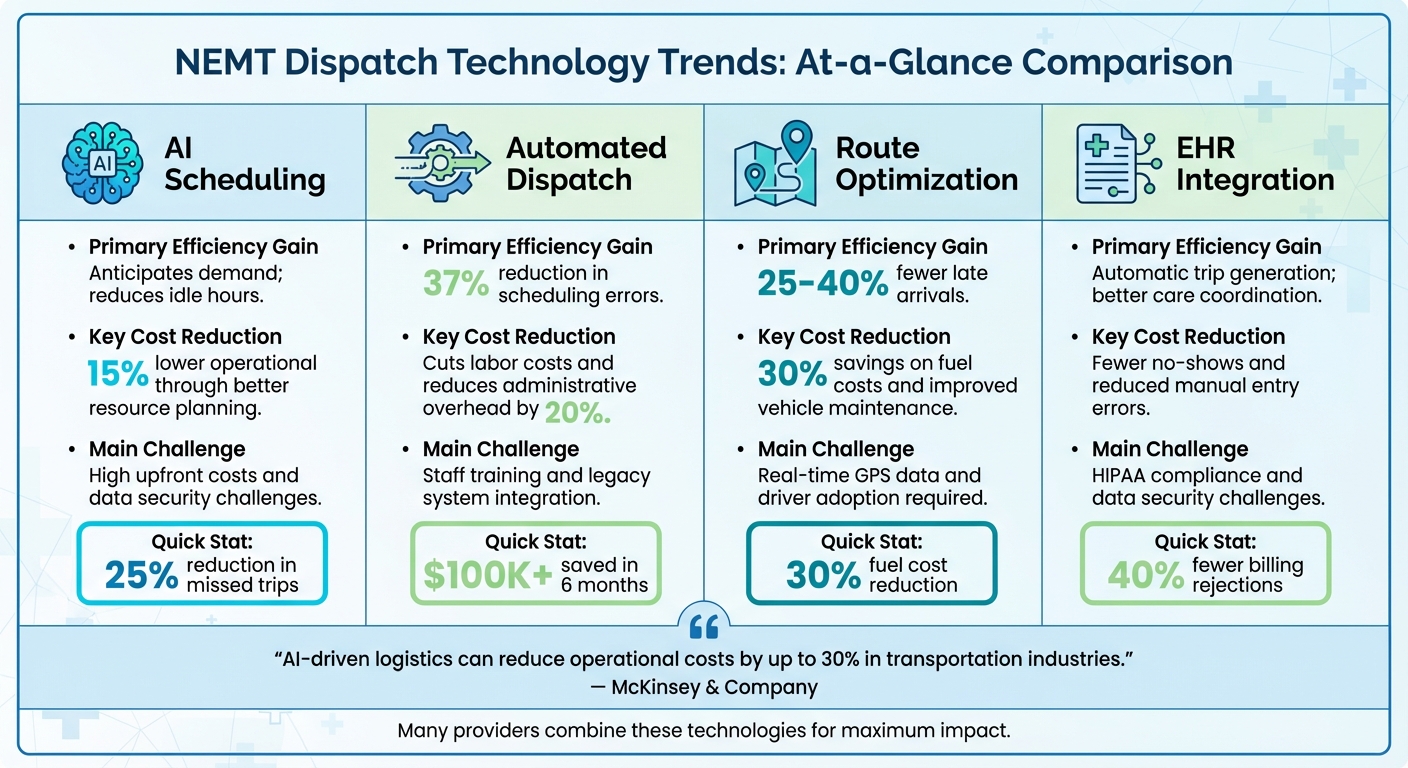
The trends in Non-Emergency Medical Transportation (NEMT) dispatch systems each bring specific benefits, depending on the size and needs of your operation. For example, AI scheduling can reduce idle hours and cut operational costs by about 15%. Similarly, automated dispatch has been shown to significantly reduce errors - MediRide in Texas saw a 37% drop in scheduling mistakes and saved over $100,000 in just six months. Real-time route optimization can lower fuel expenses by up to 30%, while EHR integration simplifies trip generation by syncing with medical appointments, cutting down on manual entry errors. However, these benefits often come with challenges during implementation.
Each trend faces specific hurdles. AI scheduling requires a substantial upfront investment and robust data security measures. Automated dispatch may encounter resistance from staff concerned about job displacement. Route optimization depends on accurate GPS data and driver cooperation. Meanwhile, EHR integration must address complex HIPAA compliance requirements and data security concerns. A side-by-side comparison helps clarify these trade-offs:
TrendPrimary Efficiency GainKey Cost Reduction AreaMain Implementation ChallengeAI SchedulingAnticipates demand; reduces idle hours 15% lower operational costs through better resource planning High upfront costs and data security challenges Automated Dispatch37% reduction in scheduling errors Cuts labor costs and reduces administrative overhead by 20% Staff training and legacy system integration Route Optimization25–40% fewer late arrivals 30% savings on fuel costs and improved vehicle maintenance Real-time GPS data and driver adoption required EHR IntegrationAutomatic trip generation; better care coordination Fewer no-shows and reduced manual entry errors HIPAA compliance and data security challenges
The financial and operational benefits vary by provider size. Route optimization often delivers quick returns by reducing mileage, while AI scheduling builds value over time as it learns and adapts to usage patterns. Smaller operators typically benefit most from cloud-based tools that automate manual tasks, while larger fleets gain from scalable AI systems capable of managing thousands of trips without a proportional increase in administrative staff.
"AI-driven logistics can reduce operational costs by up to 30% in transportation industries." - McKinsey & Company
Many providers combine these technologies for maximum impact. For instance, SafeWay Transport in Chicago integrated GPS tracking with geofencing, cutting average patient wait times from 18 minutes to 7 minutes and reducing speeding incidents by 22%. Starting with high-impact tools like automated routing often lays the foundation for incorporating more advanced systems down the line.
Key Takeaways and Future Outlook
Modern NEMT dispatch technology is reshaping the industry with measurable improvements. For instance, it has been shown to cut patient no-shows by 20–25%, lower fuel costs by 10–15%, reduce late arrivals by 25–40%, prevent up to 30% of missed visits, and decrease billing rejections by 40%. These advancements represent a major leap forward in how NEMT services operate.
The industry is shifting from being viewed as a transportation service to becoming a key component of digital healthcare. By adopting cloud-based platforms, providers can scale their services without a significant increase in administrative work. Tools like Electronic Trip Verification not only protect against audits but also speed up payment cycles. Moving away from paper manifests to secure digital workflows enhances efficiency and better integrates NEMT into the broader healthcare ecosystem. These improvements are paving the way for even more advancements in NEMT technology.
Emerging innovations include the use of blockchain for secure and tamper-proof trip logs, IoT integration for real-time patient health monitoring during transit, and the gradual adoption of autonomous vehicles for predictable routes like those used for dialysis appointments. The push toward electric vehicles is also gaining momentum, driven by the need to meet healthcare sustainability goals and reduce long-term maintenance costs. With the U.S. population aged 65 and older expected to nearly double by 2060, the demand for NEMT services is set to grow significantly.
"NEMT is no longer just about vans and call centers; it is becoming a digital-first healthcare service." - Mindbowser
To stay ahead, providers will need to embrace advanced compliance measures and mobile-first strategies. Key technologies such as AI-powered scheduling, automated dispatch systems, and EHR integration are critical for this evolution. Success hinges on prioritizing HIPAA-compliant designs, SOC 2 Type II certifications, and user-friendly mobile tools for both drivers and patients. Seamless integration with broker systems and EHR platforms will also be essential. Providers that view technology as a strategic investment will be better equipped to handle rising demand while staying compliant and profitable.
FAQs
How much data do I need for AI scheduling to work well?
When it comes to AI scheduling in NEMT (Non-Emergency Medical Transportation), the type of data you feed into the system is just as important as how much of it you have. Key data points include historical trip information like pickup and drop-off locations, times, traffic conditions, and specific patient requirements.
The saying "quality matters more than quantity" is especially true here. Detailed and accurate data significantly boosts the system's performance. While there isn’t a one-size-fits-all rule for how much data you need, starting with several months of operational data can give the AI enough to identify trends and refine its scheduling capabilities over time.
What’s the easiest first dispatch upgrade for a small fleet?
The simplest and most effective first step for improving a small NEMT fleet is switching to automated dispatch software with real-time GPS tracking and route optimization. These tools make scheduling more efficient, cut down on mistakes, and help ensure rides are on time. With easy-to-use platforms, they allow small fleets to move away from manual methods effortlessly, providing a budget-friendly way to boost operations without causing major disruptions.
How do I keep EHR integration HIPAA-compliant?
To keep Electronic Health Record (EHR) integration in line with HIPAA requirements, it's essential to focus on security measures like encryption, role-based access controls, and audit trails. These tools safeguard patient data both when it's stored and during exchanges.
Conducting regular audits and compliance checks is another critical step. These practices help spot potential weak points, ensuring that protected health information (PHI) stays secure. Additionally, access should be restricted to authorized personnel only, and encrypted data exchange must be a top priority to shield against breaches or unauthorized access.